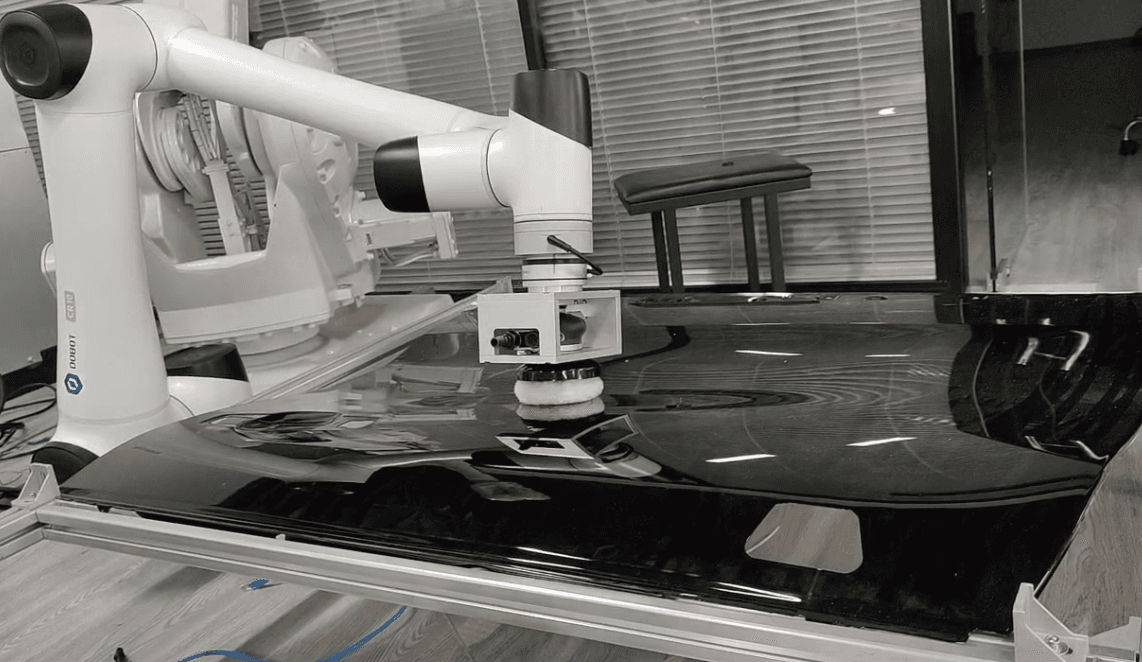
Uniform Polishing with DOBOT
Consistent finishing quality across repetitive production — without exposing staff to dust, noise, and vibration. Drag-to-teach programming for every new part in minutes.
Why automate
polishing?
Manual polishing is tiring, unstable in quality, and exposes operators to dust, noise, and vibration. Traditional CNC alternatives are expensive and inflexible when products change.
DOBOT cobots offer an in-between solution: ±0.02 mm repeatable accuracy, low installation cost, drag-to-teach programming, and safe collaboration alongside your operators.
- Repeatable path with ±0.02 mm accuracy on every part
- Compatible with servo spindles, belt grinders, and buffing wheels
- Drag-to-teach for fast reprogramming of new products
- Level 5 collision detection — safe collaboration without a cage
- Covers metal, wood, and composite materials
Why cobot-based
polishing?
Consistent Quality
The cobot follows the same path with ±0.02 mm repeatability on every part. Consistent finish from the first to the last part of the shift.
Fast Setup
Plug-and-play installation and drag-to-teach programming. From unboxing to first polished part in a few hours.
Flexibility Across Products
Change the program for a new part in minutes via a visual interface — without custom fixtures or retooling cost.
Operator Safety
Move the operator out of the dust, noise, and vibration zone — Level 5 collision detection ensures safe collaboration.
Two typical setups
for every application
We choose the layout based on the size, shape, and weight of the part.
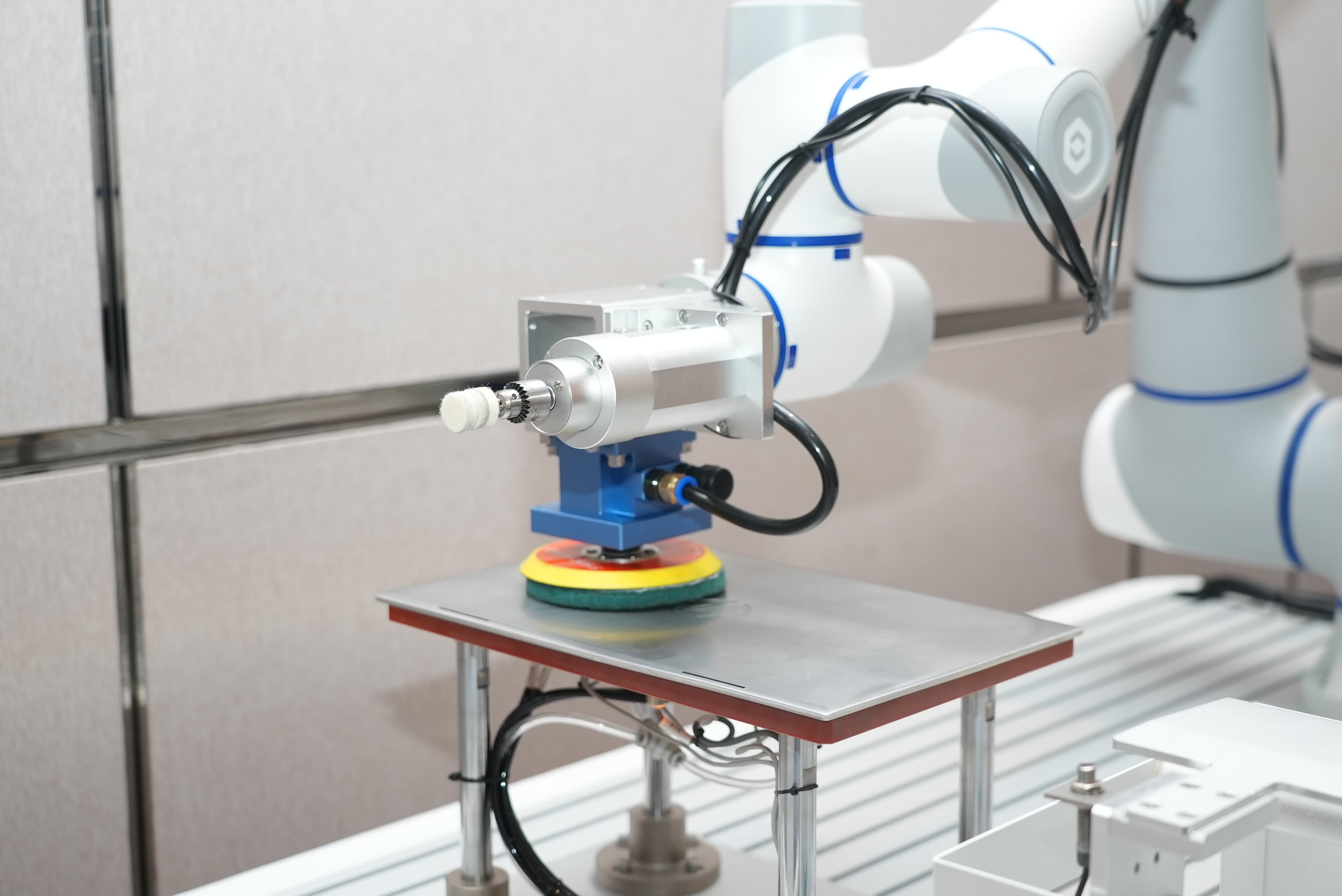
Polishing with Servo Wheel
The cobot holds the polishing tool (foam, felt, or scotch-brite) and works on a fixed workpiece. Ideal for metal surfaces, car hoods, spoilers, and mold finishing.
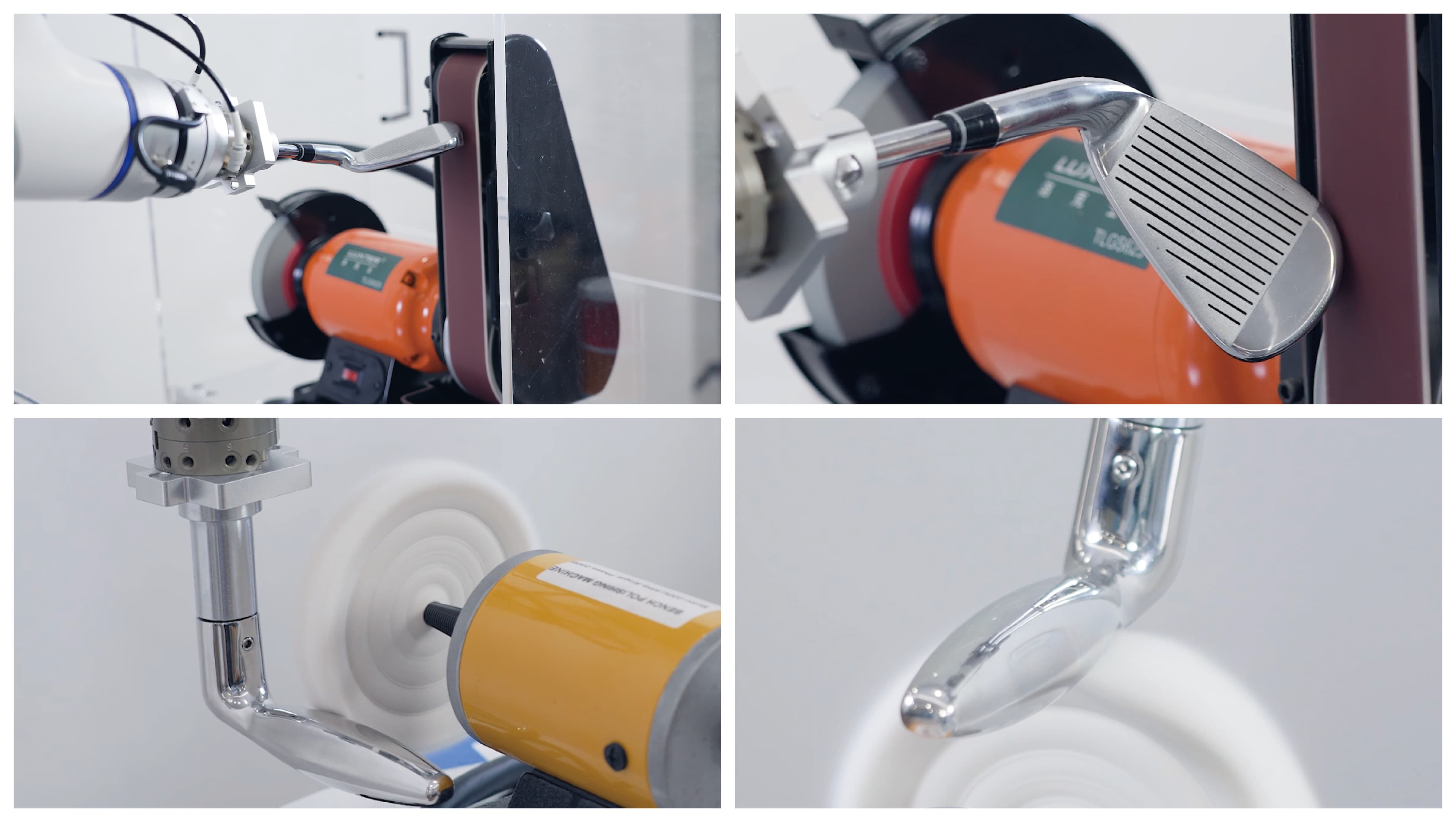
Belt Grinder & Buffing
The cobot holds the workpiece and presents it to a stationary belt grinder or buffing wheel. Uniform finish in repetitive production — ideal for golf clubs, faucet components, and handles.
In production,
not in a showroom
Real DOBOT cobot deployments in automotive and metalworking.
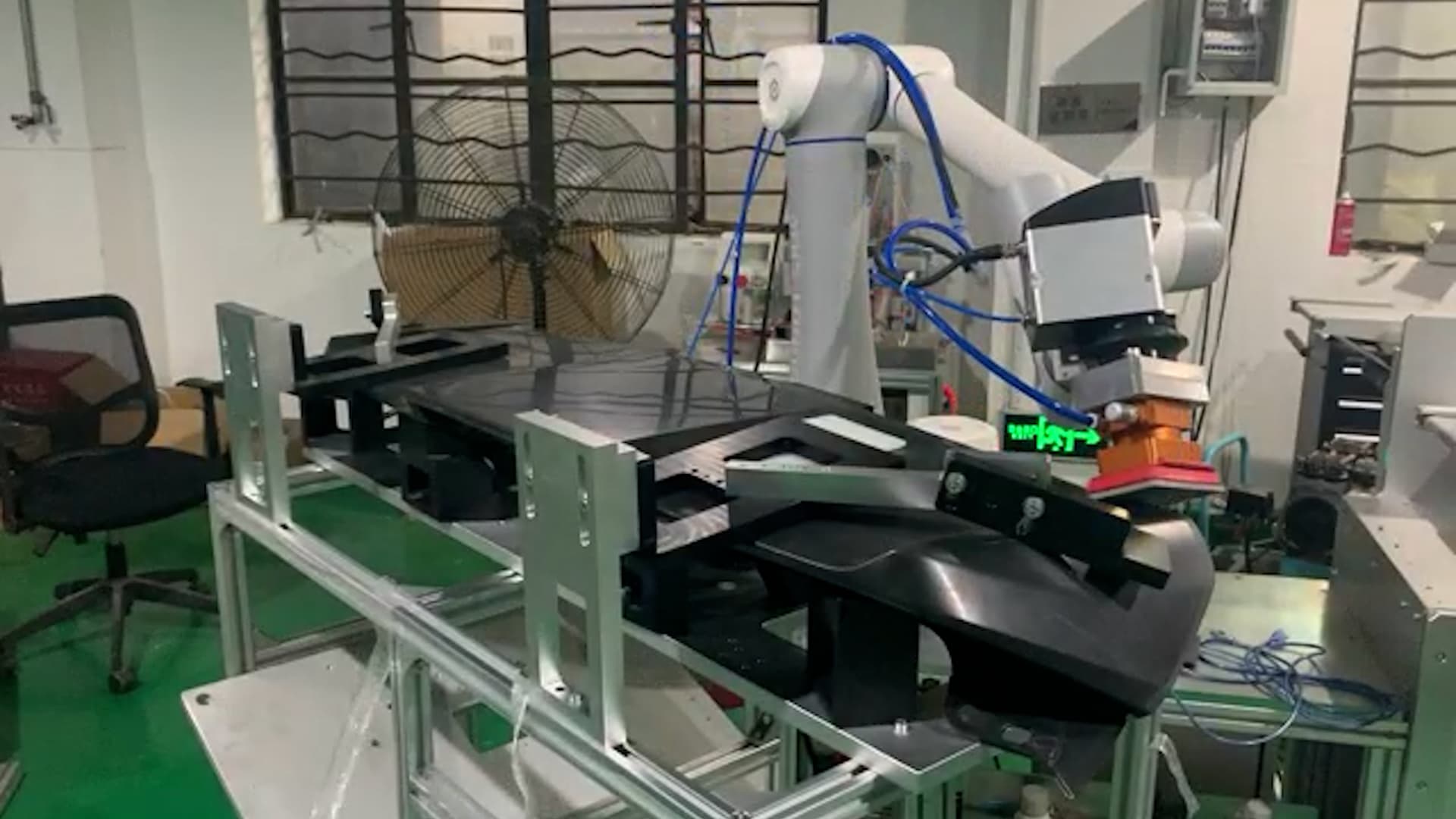
Polishing spoilers and car roof surfaces